Begin of page section:
Page sections:

  • Go to contents (Accesskey 1)
  • Go to position marker (Accesskey 2)
  • Go to main navigation (Accesskey 3)
  • Go to sub navigation (Accesskey 4)
  • Go to additional information (Accesskey 5)
  • Go to page settings (user/language) (Accesskey 8)
  • Go to search (Accesskey 9)

End of this page section. Go to overview of page sections

Begin of page section:
Page settings:

English en
Deutsch de
Search
Login

End of this page section. Go to overview of page sections

Begin of page section:
Search:

Search for details about Uni Graz
Close

End of this page section. Go to overview of page sections


Search

Begin of page section:
Main navigation:

Page navigation:

  • University

    University
    • About the University
    • Organisation
    • Faculties
    • Library
    • Working at University of Graz
    • Campus
    Developing solutions for the world of tomorrow - that is our mission. Our students and our researchers take on the great challenges of society and carry the knowledge out.
  • Research Profile

    Research Profile
    • Our Expertise
    • Research Questions
    • Research Portal
    • Promoting Research
    • Research Transfer
    • Ethics in Research
    Scientific excellence and the courage to break new ground. Research at the University of Graz creates the foundations for making the future worth living.
  • Studies

    Studies
    • Prospective Students
    • Students
  • Community

    Community
    • International
    • Location
    • Research and Business
    • Alumni
    The University of Graz is a hub for international research and brings together scientists and business experts. Moreover, it fosters the exchange and cooperation in study and teaching.
  • Spotlight
Topics
  • Our digital Advent calendar
  • Sustainable University
  • Researchers answer
  • Work for us
Close menu

End of this page section. Go to overview of page sections

Begin of page section:
You are here:

University of Graz Bodenbiologie Target groups of animal soil fauna Acari - Mites
  • Team
  • BIOMES project
  • Target groups of animal soil fauna
  • Bachelor's and Master's theses
  • Current publications
  • Latest news

End of this page section. Go to overview of page sections

Begin of page section:
Sub navigation:

  • Team
  • BIOMES project
  • Target groups of animal soil fauna
  • Bachelor's and Master's theses
  • Current publications
  • Latest news

End of this page section. Go to overview of page sections

Acari - Mites

Interesting facts about mites

Mites belong to the class Arachnida. Due to their small body size of about 0.2 to 4 mm, they are far less conspicuous than spiders or scorpions and are therefore less well known. With more than 55,000 described species, however, they represent the most diverse group within the arachnids – and estimates suggest that there may be over one million species worldwide.

Their minute size has allowed mites to colonize virtually every habitat on Earth – from deserts to Arctic regions – and they occur in both terrestrial and aquatic environments.
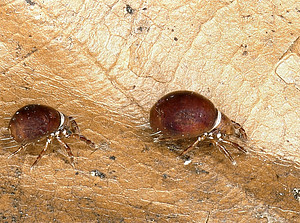
Collohmannia gigantea ©unigraz/tobias_pfingstl
©unigraz/tobias_pfingstl
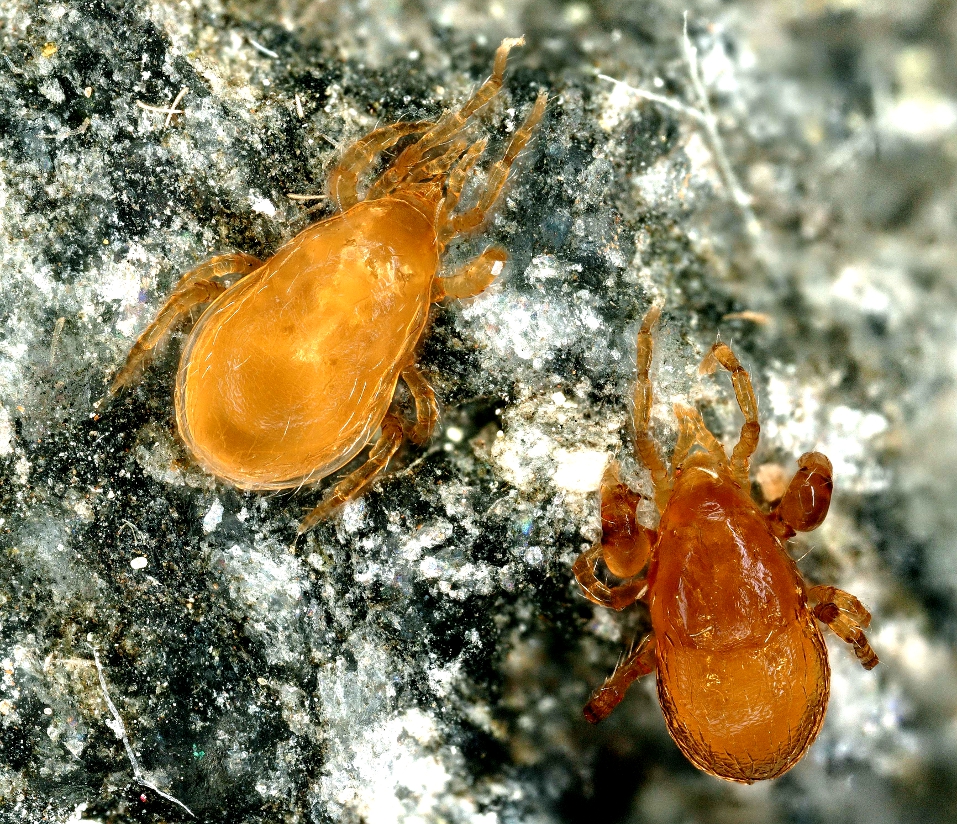
Predatory mites ©unigraz/tobias_pfingstl
©unigraz/tobias_pfingstl

Two groups of mites are particularly important for soil fauna: oribatid mites (Oribatida) and predatory mites (Gamasina). Oribatid mites are key decomposers in the soil and significantly contribute to the nutrient cycle within the soil. Predatory mites, on the other hand, are primarily carnivorous and help regulate the food web in the soil. These two groups of mites are highly sensitive to all types of soil disturbances. Therefore, our research group investigates how these organisms can be used as bioindicators and what measures can be taken to protect soil quality.

➡️ Information on other target groups

Begin of page section:
Additional information:

University of Graz
Universitaetsplatz 3
8010 Graz
Austria
  • Contact
  • Web Editors
  • Moodle
  • UNIGRAZonline
  • Imprint
  • Data Protection Declaration
  • Accessibility Declaration
Weatherstation
Uni Graz

End of this page section. Go to overview of page sections

End of this page section. Go to overview of page sections

Begin of page section:

End of this page section. Go to overview of page sections